
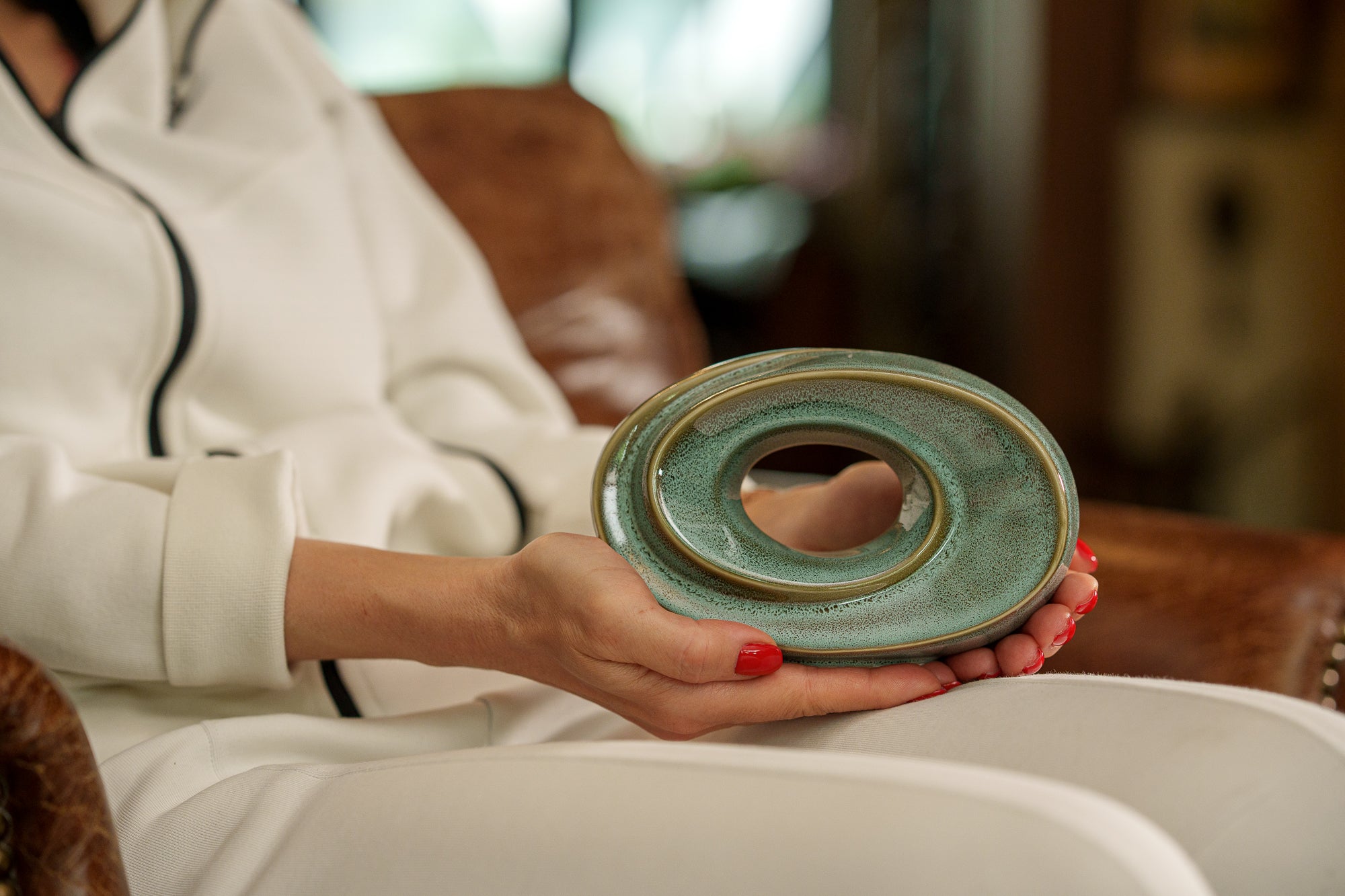
Créer un mémorial pour un être cher est un processus profondément personnel, et choisir le lieu de repos final est une décision lourde de sens. Les urnes personnalisées offrent une manière significative d'honorer leur mémoire qui va au-delà des options de catalogue standard. Ces urnes funéraires artisanales sont considérées comme des hommages artistiques, reflétant l'individualité unique, l'émotion durable et l'héritage durable de la personne qu'elles commémorent. Collaborer avec des artisans qualifiés permet aux familles de concevoir des mémoriaux véritablement sur mesure, imprégnés d'histoires personnelles et de détails intimes, rendant chaque urne unique en son genre.
Ce guide est conçu pour simplifier le processus complexe de collaboration artisanale. Il explique comment collaborer efficacement avec un designer, détaille les éléments clés à prendre en compte pour un mémorial véritablement personnalisé, et fournit des conseils pratiques pour assurer la création d'un hommage à la fois beau et durable. En comprenant les étapes nécessaires pour réaliser un design sur mesure, les familles peuvent créer une œuvre d'art durable qui sert de souvenir approprié et sincère.
Pourquoi choisir des urnes personnalisées
Les familles recherchent souvent des urnes personnalisées pour s'assurer que le mémorial reflète la personnalité et l'héritage d'un être cher. Les urnes funéraires artisanales offrent un hommage personnel et durable.
Personnalisation et signification
Les urnes personnalisées permettent aux familles d'intégrer des symboles, des couleurs et des motifs significatifs qui représentent la vie de leur être cher. Cette connexion personnelle ajoute une valeur émotionnelle au-delà des designs standards, faisant de l'urne un mémorial personnalisé.
Expertise artisanale
Collaborer avec des artisans qualifiés garantit que chaque détail est intentionnel. Les urnes funéraires artisanales offrent un savoir-faire de qualité, une précision et un soin, résultant en un souvenir à la fois durable et visuellement attrayant.
Matériaux et finitions sur mesure
Les urnes personnalisées peuvent être créées à l'aide de divers matériaux adaptés aux préférences de la famille et à l'environnement du mémorial. Chaque matériau est sélectionné pour ses qualités uniques, son esthétique et sa longévité.
Comprendre la collaboration artisanale
Travailler avec un artisan est un processus créatif collaboratif qui nécessite une communication claire, une planification et une confiance pour obtenir le design sur mesure.
Étape 1 : Sélectionner le bon artisan
Choisissez un artisan ou un atelier expérimenté dans les urnes funéraires artisanales et les urnes personnalisées. Recherchez un historique éprouvé de création de mémoriaux personnalisés :
· Un portfolio de pièces commémoratives personnalisées achevées
· Des témoignages clients positifs
· Expertise dans divers matériaux et finitions
Étape 2 : Développement du concept
Au cours de cette phase, les familles partagent leurs idées et leurs inspirations, tandis que les artisans fournissent des conseils professionnels. Les éléments clés abordés comprennent :
· Symboles ou motifs significatifs
· Palettes de couleurs et finitions
· Exigences fonctionnelles telles que la taille ou l'emplacement d'affichage
Des croquis ou des rendus numériques sont souvent fournis pour visualiser l'urne avant sa création.
Étape 3 : Affinement du design
Les familles examinent et affinent le design en donnant leur avis sur :
· Motifs et gravures
· Tons et textures de couleurs
· Taille et proportions
L'affinage assure un équilibre entre l'esthétique, le symbolisme et la fonctionnalité.
Étape 4 : Création et fabrication
Une fois finalisée, l'artisan commence à fabriquer l'urne. Ce processus garantit la création d'une urne funéraire artisanale unique et durable.
· Façonnage et moulage (pour la céramique ou le bois)
· Moulage (pour le bronze ou le métal)
· Détails, finitions et scellement

Éléments clés d'un mémorial sur mesure
La création d'un mémorial personnalisé nécessite une attention particulière à plusieurs facteurs de conception, tous contribuant au design sur mesure final.
Sélection des matériaux
Chaque matériau offre des qualités spécifiques qui influencent l'apparence, le toucher et la durabilité finale de l'urne :
|
Matériau |
Caractéristiques |
Longévité idéale |
Attrait visuel |
|
Céramique |
Artistique, polyvalente, colorée |
Haute durabilité intérieure |
Finitions lisses et émaillées |
|
Bronze |
Élégant, solide, classique |
Extrêmement durable, peut être extérieur |
Tons métalliques riches, développe une patine |
|
Bois |
Chaud, naturel, organique |
Modéré, nécessite un entretien intérieur |
Motifs de grain uniques, options durables |
|
Pierre |
Solide, intemporelle, symbolique |
Très durable |
Textures naturelles, gravures possibles |
Taille et fonction
Les considérations de taille et de fonction garantissent que l'urne répond aux besoins pratiques tout en s'adaptant à la vision du mémorial personnalisé :
· Nombre de cendres des membres de la famille à stocker
· Emplacement d'affichage (maison, niche, autel)
· Proportions et poids relatifs au matériau
Symbolisme et personnalisation
L'ajout d'éléments symboliques peut renforcer l'impact émotionnel et créer un véritable design sur mesure :
· Gravures de noms, de dates ou de citations
· Imagerie gravée ou peinte représentant des hobbies ou des passions
· Motifs culturels ou religieux
Finition et détails
La finition finale affecte à la fois la durabilité et l'impression visuelle, cruciales pour une urne funéraire artisanale durable :
· Surfaces brillantes, mates ou texturées
· Dessins peints à la main ou incrustés
· Revêtements protecteurs pour une conservation à long terme
Avantages de la collaboration artisanale
Travailler avec un artisan garantit que le mémorial est à la fois unique et significatif, offrant une valeur bien supérieure à celle d'un article produit en série.
· Connexion émotionnelle : Les familles se sentent directement impliquées dans le processus de création.
· Design unique : Chaque urne est unique.
· Conseils d'experts : Les artisans conseillent sur le design, les matériaux et les finitions.
· Durabilité : L'artisanat professionnel garantit la longévité.

Guide étape par étape pour la conception d'une urne personnalisée
Créer une urne personnalisée est un voyage profondément personnel et collaboratif qui transforme des souvenirs chéris en une œuvre d'art durable. Le processus est un mélange minutieux de souvenirs et d'artisanat, nécessitant une communication ouverte entre vous et l'artisan choisi pour garantir que le mémorial final incarne parfaitement l'esprit et l'héritage de votre être cher.
Étape 1 : Définir votre vision
Identifiez les éléments clés qui reflètent la personnalité et les valeurs de l'être cher. Cette base guide l'ensemble du processus de conception.
Étape 2 : Sélectionner un artisan
Examinez les portfolios et sélectionnez un artisan expérimenté dans les urnes funéraires artisanales et les urnes personnalisées pour commencer la collaboration artisanale.
Étape 3 : Partager des histoires et des inspirations
Fournissez des images, des symboles ou des motifs ayant une signification personnelle. Discutez de la taille de l'urne et de l'emplacement d'affichage prévu pour éclairer la conception sur mesure.
Étape 4 : Examiner les croquis et les maquettes
Donnez votre avis sur les designs proposés et affinez les couleurs, les motifs ou les inscriptions si nécessaire pour créer un mémorial personnalisé parfait.
Étape 5 : Approuver le design final
Confirmez que tous les éléments correspondent aux attentes en matière d'esthétique, de fonctionnalité et de symbolisme avant le début du processus de fabrication.
Étape 6 : Création et livraison
Les artisans fabriquent l'urne et apportent les touches finales pour garantir que le mémorial est complet et prêt à être exposé.
Conseils pour travailler avec des artisans
Une collaboration artisanale réussie repose sur une communication claire et un respect mutuel du processus créatif.
|
Conseil |
Description |
Pourquoi c'est utile |
|
Dialogue clair |
Décrivez clairement votre vision, votre histoire et vos attentes pour garantir la précision. |
Minimise les malentendus et accélère la conception. |
|
Flexibilité |
Permettez aux artisans d'apporter leur contribution créative ; leur expertise améliore souvent le design sur mesure. |
Exploite le savoir-faire professionnel pour un résultat de meilleure qualité. |
|
Planification du calendrier |
Les urnes personnalisées peuvent nécessiter des semaines, voire des mois de création, planifiez donc en conséquence. |
Gère les attentes concernant le délai de livraison. |
|
Clarté budgétaire |
Discutez des matériaux, de la main-d'œuvre et des frais d'expédition à l'avance. |
Assure la transparence financière. |
Entretien des urnes funéraires artisanales
Un entretien approprié maintient à la fois la valeur esthétique et émotionnelle de votre mémorial personnalisé.
|
Matériau |
Instructions d'entretien |
Environnement idéal |
|
Céramique |
Essuyer avec un chiffon doux ; éviter les nettoyants agressifs |
Intérieur, zone sèche |
|
Bronze |
Appliquer un polissage doux ou de la cire ; éviter les rayures |
Zones intérieures ou extérieures ombragées |
|
Bois |
Utiliser de la cire d'abeille ou un polissage naturel occasionnellement |
Intérieur, à l'abri du soleil et de l'humidité |
|
Pierre |
Nettoyer avec un savon doux ; éviter les produits chimiques |
Intérieur ou espaces extérieurs protégés
|
Valeur à long terme des urnes personnalisées
Les urnes funéraires artisanales offrent une valeur émotionnelle, esthétique et pratique qui perdure.
· Signification émotionnelle : Reflète les histoires personnelles et l'héritage.
· Potentiel d'héritage : Peut être conservé pendant des générations.
· Expérience commémorative améliorée : Les caractéristiques commémoratives personnalisées favorisent un souvenir significatif.
Créer un mémorial sur mesure garantit que l'urne devient un hommage durable à la vie d'un être cher.

Dernière pensée
Choisir une urne personnalisée est un investissement dans la création d'un hommage permanent et significatif qui célèbre véritablement la vie vécue, transformant le processus commémoratif en un acte de création sincère. La collaboration profondément impliquée avec l'artisan élève un simple récipient en une pièce d'art unique, offrant un réconfort durable et établissant une connexion tangible avec le souvenir de l'être cher. En prenant le temps de concevoir un mémorial personnalisé, les familles s'assurent que l'histoire unique de leur être cher est préservée avec dignité, beauté et affection durable, ce qui en fait un souvenir qui honorera leur héritage pour les générations à venir. Pour commencer à créer votre hommage unique et discuter des possibilités d'un design véritablement sur mesure, veuillez nous contacter.
Foire aux questions
1. Comment créer une urne personnalisée avec un artisan ?
Le processus comprend la sélection des matériaux, le partage d'histoires personnelles et d'inspirations, l'examen des croquis de conception et l'approbation de la création finale. Chaque étape nécessite une étroite collaboration artisanale pour assurer un mémorial personnalisé et significatif.
2. Quels matériaux sont couramment utilisés pour les urnes funéraires artisanales ?
La céramique, le bronze, le bois et la pierre sont des matériaux populaires pour les urnes funéraires artisanales. Chacun offre une esthétique, une durabilité et une signification émotionnelle uniques pour un design sur mesure.
3. Les urnes personnalisées peuvent-elles inclure des symboles ou des œuvres d'art personnelles ?
Oui. Les urnes personnalisées sont conçues spécifiquement pour incorporer des éléments personnels. Des gravures, des dessins peints à la main et des motifs symboliques peuvent être ajoutés pour créer un mémorial véritablement personnalisé.
4. Combien de temps faut-il pour fabriquer une urne personnalisée ?
Selon la complexité du design sur mesure et les matériaux utilisés, les urnes artisanales peuvent prendre de plusieurs semaines à quelques mois pour être achevées. Il est préférable de discuter du calendrier avec votre artisan lors de la consultation initiale.
5. Comment choisir le bon artisan ?
Recherchez l'expérience avec les urnes funéraires artisanales, un solide portfolio de travaux personnalisés, des avis clients positifs et des compétences en communication claires pour vous assurer que votre vision d'un mémorial personnalisé est réalisée.
6. Les urnes personnalisées sont-elles adaptées à une exposition intérieure et extérieure ?
Oui. La sélection des matériaux détermine l'adéquation. Le bronze et la pierre sont généralement idéaux pour les espaces extérieurs protégés, tandis que la céramique et le bois sont les mieux adaptés à une exposition intérieure. Consultez l'artisan concernant les soins appropriés pour un placement à long terme.

Partager:
Des monuments qui résistent au temps et aux éléments
Alors que la crémation est de plus en plus répandue dans le monde, les familles redéfinissent la façon dont elles font leurs adieux