
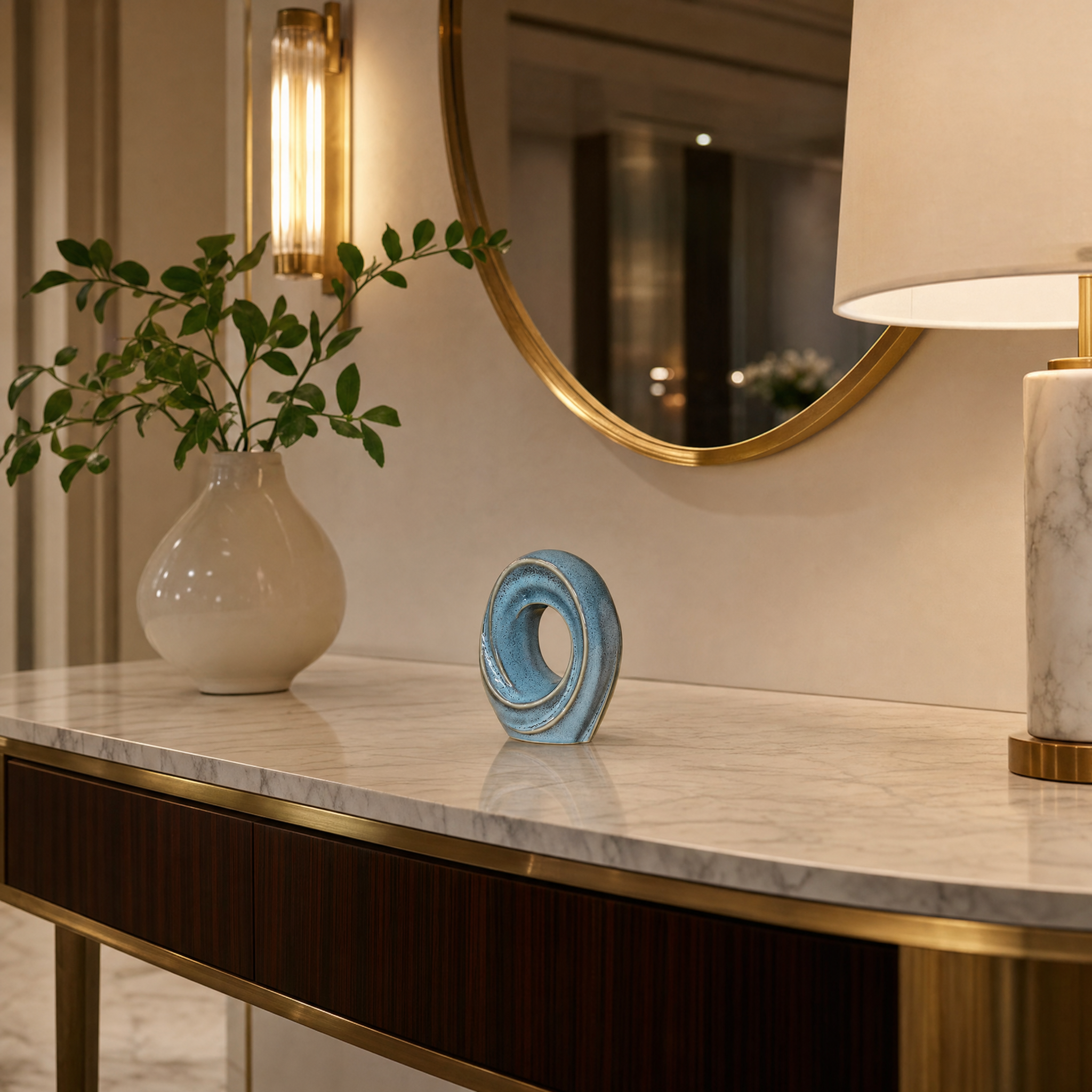
Grief doesn’t disappear - it evolves. And for many people, remembrance becomes something quiet, personal, and deeply woven into everyday life. A memorial urn, often seen as purely functional, can instead become a meaningful and even beautiful part of a home’s interior. When approached thoughtfully, it doesn’t feel like an object of loss, but rather a symbol of presence, memory, and love.
Here’s how a memorial urn can be integrated into interior design in a way that feels natural, intentional, and even comforting.
A Story That Lives on the Shelf
Anna had always shared her apartment with her golden retriever Milo. After he passed, she struggled with the idea of “putting him away.” Instead, she placed his urn on a floating shelf in her living room, alongside a small framed photo, a ceramic bowl he used, and a trailing plant.
Over time, guests didn’t see it as something somber. It became a quiet corner of her home that told a story - one of companionship, warmth, and years of shared life.
A memorial urn, when placed among meaningful objects, becomes part of a narrative rather than a standalone reminder of loss.

Blending with Existing Aesthetics
One of the easiest ways to integrate an urn is to treat it like any other design object. Consider the existing style of your space:
- Minimalist interiors benefit from clean shapes, neutral tones, and subtle finishes.
- Bohemian spaces allow for more texture - ceramic, matte surfaces, or hand-crafted details.
- Modern homes can incorporate sculptural urns that resemble contemporary art pieces.
The key is cohesion. When the urn echoes the colors, materials, or shapes already present in the room, it feels intentional rather than out of place.

Creating a Dedicated Memory Corner
Some people prefer a more defined space for remembrance. This doesn’t have to feel heavy or ceremonial - it can be gentle and inviting.
A small console table, a corner shelf, or even a windowsill can become a “memory corner” that includes:
- The urn
- A candle or soft lighting
- A plant or flowers
- Personal items like collars, letters, or photos
Lighting plays a powerful role here. Warm, indirect light can transform the space into something peaceful rather than melancholic.

Dual-Purpose Design: Urns That Become Vases
In recent years, design has evolved to meet both emotional and aesthetic needs. Some modern memorial urns are thoughtfully created to serve a dual purpose - they can also be used as a vase.
This approach allows the urn to hold fresh flowers, dried arrangements, or even simple greenery, bringing a sense of life and renewal into the space. It softens the symbolism and creates a beautiful daily ritual - changing flowers, arranging stems, or simply enjoying the presence of something living.

For many, this dual functionality makes the urn feel less like a static object and more like an active part of the home.
Discreet Integration for Private Remembrance
Not everyone wants the urn to be immediately visible. Interior design can accommodate that too. Some subtle approaches include placing the urn inside a glass cabinet among books and objects or integrating it into a bookshelf as part of a styled arrangement. This approach allows the memory to remain present without being the focal point of the space.
Turning the Urn into an Artistic Statement
Modern urn design has evolved far beyond traditional expectations. Many are now created as sculptural pieces that stand on their own as art.
In this context, the urn can:
- Sit on a pedestal like a sculpture
- Be placed on a coffee table as a centerpiece
- Act as a visual anchor in a room
Visitors may not even recognize it as an urn at first - and that’s part of the beauty. It invites curiosity, conversation, and ultimately, storytelling.

Nature as a Companion Element
Pairing an urn with natural elements can soften its presence and create a sense of continuity.
Consider placing it:
- Near indoor plants or a small indoor garden
- By a window with natural light
- Next to materials like wood, stone, or linen
Nature brings movement and life into the space, balancing the stillness of the urn and symbolizing cycles rather than endings.

A Home That Reflects Love, Not Loss
At its core, integrating a memorial urn into interior design is not about decoration - it’s about connection. It’s about allowing memories to exist in the same spaces where life continues.
A well-placed urn doesn’t interrupt a home’s atmosphere. It deepens it.
Because ultimately, a home is not just defined by furniture or style - it’s shaped by the lives, relationships, and stories that unfold within it. And sometimes, the most meaningful design choice is the one that keeps those stories close!
Share:
Why We Talk to Loved Ones Who Have Passed Away: The Psychology of Continuing Bonds
The Science of Ashes: Do Cremated Remains Expire and Why Do Colors Vary?