
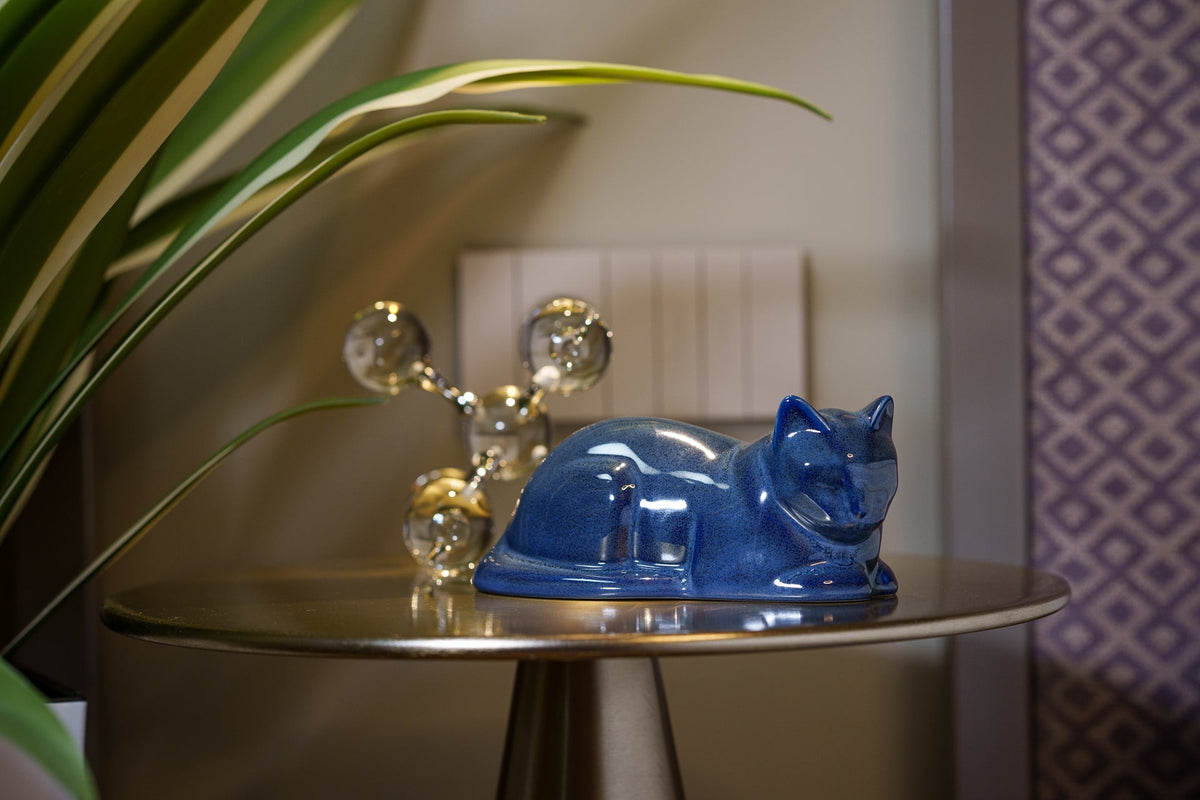
When a pet dies, the world can suddenly feel unfamiliar.
The places are still there. The bed is still in the corner. The leash may still hang by the door. The house has not changed, yet everything inside it seems to have a different meaning.
Grief is often described as something invisible — an emotion that moves through us, changes with time and cannot easily be controlled. But there are physical objects that become part of that experience. Photographs. Collars. Toys. Blankets. And, for many people, the urn that holds their pet's ashes.
An urn may seem like a simple vessel. But its design can influence something much more personal: how we continue to relate to the animal we have lost.
Grief Needs Somewhere to Go
The death of a pet creates an unusual contradiction. We know that their physical presence has ended, but our relationship with them does not disappear at the same moment.
We may still speak about them. We may still look toward the place where they used to sleep. We may instinctively expect to hear their footsteps or see them waiting at the door.
The mind understands absence long before the heart accepts it.
This is one reason physical objects can become so meaningful during grief. They give an otherwise intangible relationship something tangible to hold on to. An urn does not bring a pet back, nor does it remove the pain of losing them. But it can provide a defined place for remembrance.
Instead of asking where the relationship has gone, we can begin to understand that it has changed.

An Urn Is Not Just a Container
Functionally, an urn holds ashes. Emotionally, it can represent an entire life.
For a pet, that life may have been measured in seemingly ordinary moments: morning walks, waiting for dinner, sleeping beside someone during a difficult day, sitting quietly in the same room, greeting their person after work.
Those moments rarely feel significant while they are happening. Their importance becomes clearer when they are no longer part of everyday life.
This is why the design of an urn can matter.
A memorial object can feel cold, formal and distant, or it can feel warm, familiar and connected to the personality of the animal. The difference may seem subtle from the outside, but to someone grieving, subtlety can be everything.
The urn becomes one of the first physical objects that says: this life mattered.
Design Can Create a Sense of Continuity
Grief often feels like a sudden break in time.
There is a “before” and an “after.” Before, the pet was part of daily life. After, there is an absence where that presence used to be.
A thoughtfully designed urn can introduce a sense of continuity between these two worlds.
Its form, material or appearance may remind someone of the pet's character. Perhaps something simple feels right for an exceptionally calm animal. Perhaps a distinctive form reflects a pet whose personality filled every room. Perhaps a natural material feels appropriate for an animal who spent most of their life outdoors.
There is no universal design for grief because there is no universal relationship between a person and their pet.
The object becomes meaningful precisely because it reflects something personal.

The Psychology of a Familiar Object
Humans attach memories to objects constantly.
A particular perfume can bring back a person we have not seen in years. A song can return us to a specific summer. An old photograph can make a forgotten moment suddenly feel close again.
Memorial objects work in a similar way.
The presence of an urn can become part of the environment in which someone continues their life. It may sit somewhere quiet, somewhere surrounded by photographs, or simply somewhere that feels natural within the home.
Over time, the object can become less strongly associated with the moment of death and more strongly associated with the life that came before it.
This distinction matters.
An object can initially remind us of what we lost. Eventually, it can begin reminding us of what we had.
From Painful Reminder to Meaningful Presence
The way we perceive a memorial object can change with time.
In the beginning, seeing an urn may make the loss feel painfully immediate. It is a physical confirmation of something we are struggling to accept.
Months or years later, the same object may evoke something different.
It can become a quiet reminder of companionship rather than a symbol of death. It can recall the years shared together, the personality of the animal, and the small routines that once made up everyday life.
The urn itself has not changed.
Our relationship with it has.
This is one of the most interesting aspects of memorial design: an object can accompany grief as grief itself changes.

Why Beauty Can Matter in Grief
There is something deeply human about wanting to surround loss with beauty.
Across cultures and centuries, people have created beautiful objects for the dead — from monuments and sculptures to jewelry, textiles and architectural spaces.
The purpose is not to make death beautiful.
It is to make space for love within something painful.
The same can be true of a pet urn.
Choosing something carefully made, aesthetically meaningful or visually connected to the animal can transform the object from a reminder of an ending into a tribute to a life.
Beauty does not erase grief. Instead, it can coexist with it.
A beautiful object can say that the life being remembered deserves care, even after it has ended.
Pets Leave More Than Memories Behind
When we lose a pet, we often think about the things they left behind: photographs, toys, collars, beds and other belongings.
But their greatest legacy is rarely an object.
It is the person we became while loving them.
A dog may have taught someone to go outside every morning. A cat may have made a quiet home feel less lonely. A pet may have been present through university, a breakup, a move, a first job, a marriage or an entire childhood.
They become witnesses to chapters of our lives.
An urn cannot contain any of that.
But it can become a physical symbol of it.

Designing a Place for Memory
Perhaps the most important role of a pet urn is not what it contains, but what it allows us to do.
It allows us to give memory a place.
Grief does not follow a straight path, and there is no correct way to remember an animal. Some people want their pet's ashes close. Others prefer a private memorial space. Some want an urn that blends quietly into their home, while others choose something that feels unmistakably connected to their companion.
None of these choices are more or less meaningful.
What matters is that the object feels right for the relationship.
Because the purpose of memorial design is ultimately not to design grief itself. It is to create something that can exist alongside it.
When an Urn Becomes Part of the Story
Eventually, the urn can become one small part of a much larger story.
The story is not about how the pet died. It is about how they lived.
It is about the morning routines, the ridiculous habits, the favorite sleeping place, the unexpected moments of comfort, the walks taken together and the countless ordinary days that only became precious after they were gone.
Good memorial design understands this.
It does not attempt to reproduce the animal or replace their presence. Instead, it creates an object capable of carrying a fragment of their story forward.
And perhaps that is why design can change the experience of grief.
Not because the right shape, material or color can make losing a pet hurt less.
But because sometimes, when words are not enough, the right object can give love somewhere to remain.

Share:
What Are the Most Unique Urns Available Today?