
When a beloved pet dies, many families look for a way to remember them that feels connected to life rather than simply marking an ending. A memorial tree can offer exactly that: a living tribute that changes with the seasons and continues to grow over the years.
For some pet owners, planting a tree in memory of their companion feels especially meaningful. It creates a physical place to visit while allowing the memory of the animal to become part of a landscape.
But can a pet’s ashes actually be planted with a tree? And what should you know before putting cremated remains directly into the soil?

Can Pet Ashes Be Planted With a Tree?
Yes, pet ashes can be incorporated into a memorial planting, but they should not necessarily be poured directly into the soil without consideration.
Cremated remains are primarily made up of mineral compounds and can have a relatively high pH and salt content. In concentrated amounts, these properties can potentially make the surrounding soil less suitable for a young plant.
For this reason, many memorial planting approaches recommend using only a small amount of ashes and mixing them thoroughly with soil or another suitable growing medium rather than placing a large quantity directly around the roots.
The goal is to create a healthy environment for the tree while allowing a meaningful connection to the pet's ashes.
Why Choose a Tree as a Pet Memorial?
A tree offers something that many traditional memorials cannot: visible growth over time.
A young tree may begin as a small plant and gradually become part of the landscape. Its branches expand, its leaves return each spring, and its appearance changes throughout the year.
For someone grieving a pet, this natural cycle can become a powerful symbol.
The tree does not erase the loss. Instead, it creates a place where memories can continue to exist alongside something living.
Returning to the tree years later can also create a sense of continuity. The pet may no longer be physically present, but the memorial remains part of the family’s surroundings.

Do Pet Ashes Help a Tree Grow?
This is a common misconception.
Pet ashes are not necessarily a natural fertilizer for a tree.
Cremated remains contain minerals such as calcium and phosphorus, but they do not provide everything a growing tree needs. They can also be alkaline and contain concentrated salts.
Adding too much directly to the soil can therefore affect its chemistry and potentially harm plants, particularly young trees.
The tree should be chosen and planted according to its own horticultural requirements, with the ashes incorporated carefully rather than treated as a conventional fertilizer.
How Much Ash Should Be Used?
There is no universal amount that is appropriate for every tree or planting environment.
The amount depends on factors such as the species of tree, the size of the planting area, the existing soil, drainage, and the amount of ashes available.
A small portion of the ashes can be incorporated into a larger volume of soil or growing medium, while the remaining ashes can be kept in an urn or used for another memorial.
If you are unsure how much to use, consulting a horticulturist, arborist, or local nursery can help you choose an approach that prioritizes the health of the tree.
Should You Put the Ashes Directly on the Roots?
It is generally better to avoid placing a concentrated amount of cremated remains directly against the roots of a young tree.
The high mineral and salt concentration of ashes can create an environment that is too harsh for developing roots.
Instead, the ashes can be thoroughly mixed into the surrounding soil or incorporated into an appropriate planting medium.
This allows the memorial aspect to remain meaningful without unnecessarily concentrating the cremated remains around the root system.

What Type of Tree Should You Choose?
The best tree depends heavily on where you live and the conditions of the planting site.
Consider the local climate, soil type, sunlight, available space, drainage, and the mature size of the tree.
A tree that looks beautiful when young may eventually become very large. Its roots and branches can also require considerable space.
For this reason, choosing a tree based purely on symbolism or appearance is not always the best approach.
A local gardening professional can help you select a species that is naturally suited to your environment.
You may also want to consider what the tree means to you.
Was there a particular tree your pet loved sitting beneath? Did they enjoy walking through a certain type of landscape? Was there a season that reminds you of them?
These personal associations can make the memorial even more meaningful.
Can You Plant a Memorial Tree in a Garden?
Yes, a private garden can be a beautiful location for a pet memorial tree, provided that local rules and property conditions allow it.
Before planting, consider how the tree will look when fully grown.
Think about its future height, root system, proximity to buildings, fences, pathways, underground utilities, and other plants.
The location should also be somewhere that you can comfortably visit and maintain.
A memorial does not need to be elaborate. Sometimes a simple tree surrounded by flowers or a small garden can create a peaceful place to remember a pet.
What If You Don't Have a Garden?
You do not need a large private garden to create a living memorial.
A suitable tree can sometimes be planted in a container, depending on the species and local climate. Some smaller varieties are better suited to container growing than large trees.
Another option is to create a memorial planting with a shrub or perennial plant instead of a tree.
The important thing is not the size of the plant but the meaning behind it.
A small plant on a balcony or terrace can become just as meaningful as a large tree in a garden if it gives you a place to pause and remember.

Can You Use All of Your Pet's Ashes?
You do not have to.
In fact, many families may prefer to use only a small portion of their pet's ashes for a memorial planting.
The remaining ashes can be kept in an urn, allowing the family to have both a living memorial and a permanent resting place.
This can be particularly meaningful for families who want to incorporate their pet into a garden while also preserving the majority of the ashes.
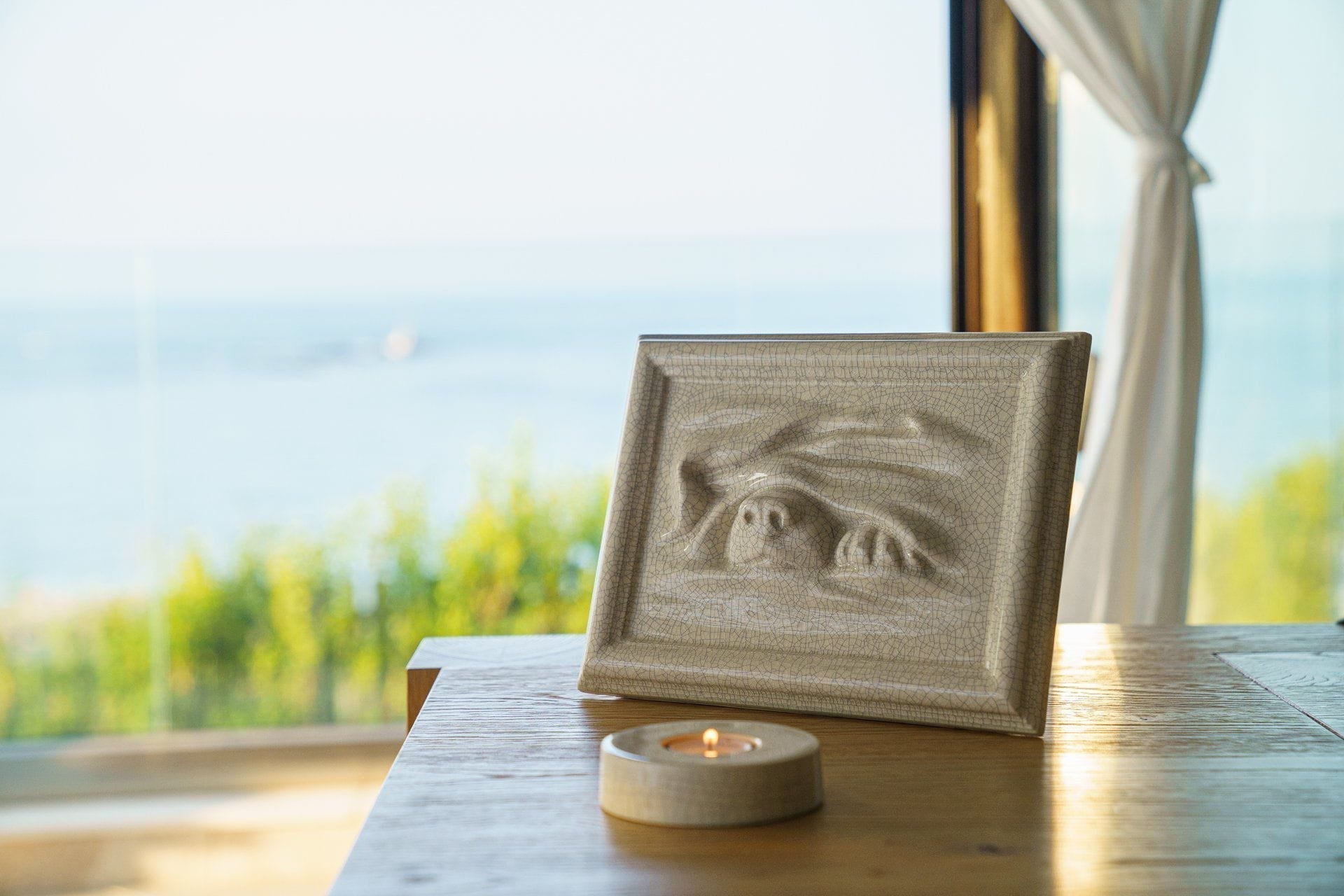
A handcrafted Pulvis urn can provide a dedicated place for the remaining ashes, while the tree becomes a living part of the memorial.
What If You Want to Keep the Ashes in an Urn?
Choosing a tree does not mean you have to give up the idea of an urn.
The two can exist together.
Some families choose to keep the ashes in a beautiful urn and create a separate memorial garden nearby.
Others use a small portion of the ashes in the planting while keeping the rest in an urn.
This approach can provide different ways of remembering the same animal: one through a tangible object and another through nature.
A memorial urn can remain inside the home, while the tree provides an outdoor place associated with the pet.

Can You Plant Flowers Around the Tree?
Flowers can make a memorial tree feel even more personal.
You might choose plants that bloom during the season when your pet was born, adopted, or passed away.
Alternatively, you could choose flowers in colors associated with your pet or simply select varieties that thrive naturally in the location.
The surrounding garden can become part of the memorial itself.
Over time, it may develop into a small space filled with plants, photographs, stones, or other objects connected to your pet.
Can You Add a Memorial Plaque?
A small plaque can provide another way to personalize the space.
It might include the pet's name, dates, a short message, or simply a phrase that reminds you of them.
Some families prefer something discreet, while others may want a more visible marker.
A memorial does not need to explain everything about the relationship. Sometimes a name alone is enough.
What Happens to the Ashes Over Time?
Once incorporated into soil, cremated remains gradually become part of the surrounding environment.
However, they do not simply disappear overnight, nor do they necessarily transform into plant nutrients in the same way as organic compost.
Their mineral components interact with the soil over time.
The tree itself continues to grow independently, supported by appropriate soil conditions, water, nutrients, sunlight, and care.
This distinction is important because the symbolic connection between the tree and the ashes does not mean that the ashes themselves are responsible for the tree's growth.
The meaning is emotional rather than purely biological.

What If the Tree Dies?
This can be one of the most difficult possibilities to consider.
A tree is a living organism and, like all living things, it can become diseased, damaged, or die.
If this happens, it does not mean that the memorial has failed.
The memory of the pet does not depend on the survival of a particular tree.
You could plant another tree, create a different garden, keep a piece of the original tree if appropriate, or move the memorial in another direction.
The tree is a symbol of remembrance, not the memory itself.
Can a Memorial Tree Be Planted in a Public Place?
This depends entirely on local regulations and permission from the relevant property owner or authority.
Planting a tree in a public park, woodland, cemetery, or other shared space without permission may not be allowed.
If you want a public memorial, contact the relevant authority first and ask about its policies.
In some places, there may be designated memorial planting programs that allow families to dedicate trees in appropriate locations.

A Living Memorial for a Beloved Pet
A memorial tree can offer a different way of thinking about pet remembrance.
Instead of focusing only on what has been lost, it creates something that continues to change and exist.
The tree may provide shade years later. Its leaves may return each spring. Birds may eventually use its branches. The space around it may become part of everyday life.
For a family grieving a pet, these small changes can become meaningful.
The tree does not replace the animal. It simply gives the memory somewhere to live.
And for families who want to combine a living memorial with a more traditional resting place, there is no need to choose between them.
A portion of the ashes can be incorporated into a carefully planned planting, while the rest can remain safely preserved in a memorial urn.
Pulvis creates handcrafted urns designed to give cremated remains a lasting and meaningful place within the home. Combined with a memorial tree or garden, an urn can become part of a broader tribute that reflects both the physical presence of the ashes and the continuing memory of the pet.
Ultimately, a memorial tree is not about replacing the past with something new. It is about creating a place where the past can remain part of the present.
A tree grows, changes, and moves through the seasons — much like the memories we carry with us after losing someone we love.
And sometimes, that is exactly what a pet memorial is meant to do.
Share:
Can Pet Ashes Be Made Into Glass Art?
Can You Move an Urn From One Cemetery to Another?