
A photograph can bring back the way a pet looked at us. A video can recover the sound of paws crossing the floor, the excitement of a familiar greeting, or a small habit we had almost forgotten. But what happens when technology goes further than preserving these moments and begins to recreate the animal itself?
Artificial intelligence is changing the way we remember those who are gone, and the conversation is no longer limited to human relationships. Digital memorials, interactive avatars and AI-generated recreations are opening new possibilities for people grieving the loss of a pet. They promise something that traditional photographs cannot: an experience that feels less like looking back and more like interacting again. Yet this possibility raises a difficult question. Can technology preserve a relationship, or can it only reproduce the signs of one?
From photographs to digital replicas
For generations, pet owners have kept photographs, collars, paw prints and favourite toys as reminders of the animals they loved. These objects preserve something tangible: a trace of a particular life, connected to a specific memory. Digital technology has expanded this collection of possibilities. Videos, voice recordings, online albums and memorial pages allow memories to be stored, shared and revisited long after a pet has died.
Artificial intelligence introduces a different dimension. Depending on the tools used, it can generate new images from existing photographs, imitate patterns of behaviour, produce a synthetic voice or create a conversational character based on information supplied by its owner. More ambitious systems may combine photographs, videos, written descriptions and behavioural records to construct a digital representation of an individual animal.
The distinction matters. A photograph documents a moment that happened. An AI-generated image imagines a new one. A video preserves an actual movement, while a digital replica may simulate a movement that was never recorded. The result can feel emotionally convincing, but it is not the same as recovering the original experience.
This technology is still developing, and not every digital memorial uses artificial intelligence. Some are simply carefully organised collections of photographs and stories. Others aim to create an interactive presence. Understanding the difference helps owners decide what kind of remembrance they want and what they are comfortable allowing technology to create.

Why do we want to bring a pet back digitally?
The loss of a pet often changes the smallest parts of everyday life. There is no familiar greeting at the door, no routine walk, no animal occupying its usual place in the room. Grief is not always experienced through dramatic moments. Sometimes it appears in the automatic movement towards an empty space or the sudden realisation that a familiar sound will not return.
Digital recreations may appeal because they offer a response to this absence. They can make memories easier to access, help families share stories and give owners new ways to revisit the details that made an animal distinctive. For someone who has very few photographs or recordings, even a modest digital archive may become meaningful.
The appeal is understandable. People have always used objects and rituals to maintain a connection with those they have lost. An AI-generated representation is a new form of this impulse, not necessarily a replacement for older traditions.
However, the emotional effect will not be the same for everyone. One person may find comfort in an interactive recreation, while another may find it unsettling or prefer to remember their pet without a simulated presence. Neither response is inherently more loving. The question is not whether technology is a good or bad way to grieve, but whether a particular form of remembrance supports the person using it.
The difference between memory and imitation
The greatest promise of digital replicas is also their most significant limitation: they can create the impression of presence without restoring the relationship itself.
An AI system can generate an image that resembles a pet, reproduce a recorded sound or simulate a behaviour described by its owner. It cannot bring back the animal's awareness, independent personality or capacity to respond in the way it once did. Even an extremely convincing recreation remains a representation built from available data and the system's interpretation of it.
This distinction becomes especially important when a digital pet appears to communicate. A generated response may sound familiar, but it is not evidence that the animal would have responded in that way. The system is producing an imitation, not revealing the thoughts or feelings of the pet who died.
For some owners, that difference may not diminish the experience. They may use the replica consciously, as an imaginative tribute rather than a literal continuation of the relationship. For others, the artificial interaction may blur a boundary they would rather preserve.
A memorial does not need to recreate a living presence to be meaningful. Sometimes, its value lies precisely in acknowledging that a life was real, individual and irreplaceable.
When remembrance becomes a product
Digital pet memorials also raise questions that extend beyond grief. Photographs, recordings and behavioural information can be deeply personal, particularly when they document an animal's daily life alongside that of its owner. Uploading them to an online service may involve storing data on external platforms, granting permissions for processing or accepting terms that are difficult to understand.
Owners should consider what happens to their material after it is uploaded. Can the files be downloaded? Can the account be deleted? Does the service retain the images or use them to improve its systems? What happens if the company closes, changes its pricing or discontinues the product?
There is also a financial and ethical question. A service built around grief may offer comfort, but it can also create an incentive to keep paying for continued access to a digital representation. If the replica becomes important to an owner, the possibility of losing access to it may create a new kind of vulnerability.
For these reasons, the quality of a digital memorial should not be judged only by how realistic it appears. Transparency, privacy, ownership and the ability to preserve personal files independently are equally important. A memorial should remain meaningful to its owner without requiring indefinite dependence on a particular platform.

Can technology replace a physical memorial?
Digital and physical memorials serve different purposes. A digital archive can hold thousands of photographs, preserve sounds and connect relatives who live far apart. It can be updated, shared and accessed from almost anywhere. A physical object, by contrast, occupies a place in the world. It can be touched, kept close and incorporated into everyday life without a screen, an account or an internet connection.
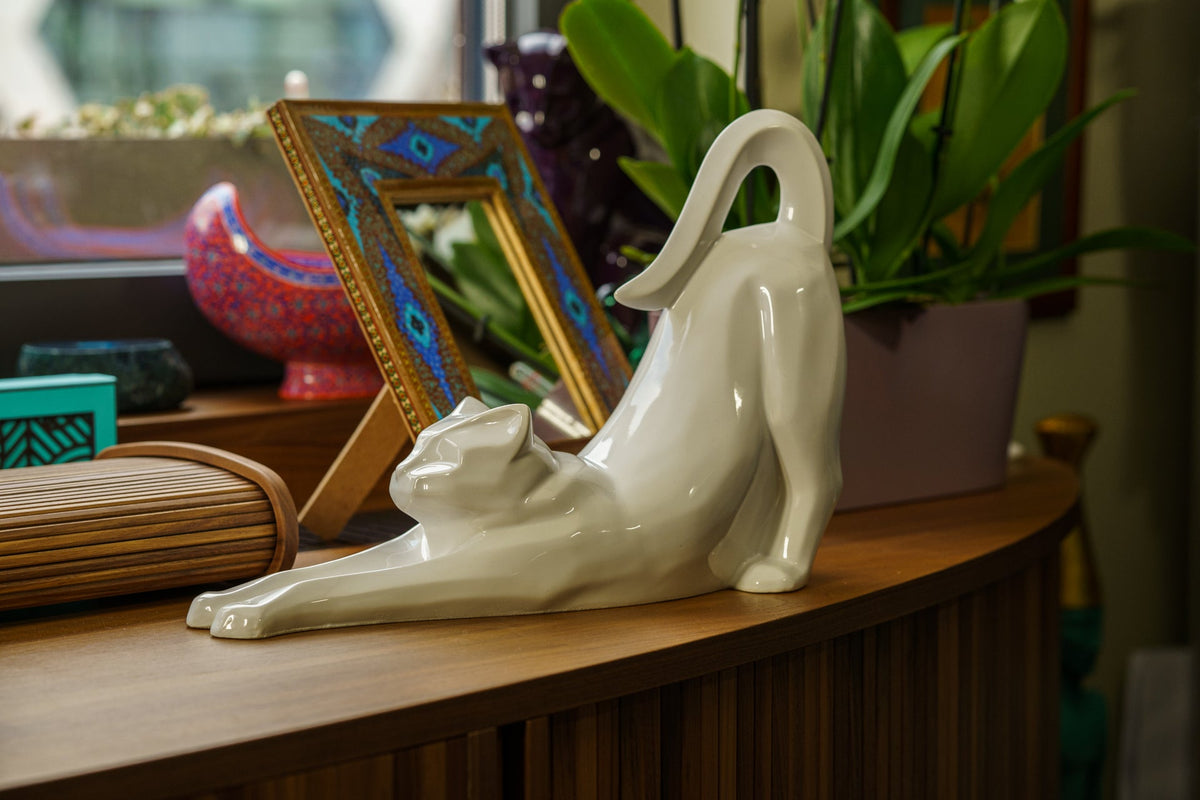
A ceramic pet urn, for example, does not attempt to reproduce an animal's appearance or behaviour. Its significance comes from its material presence and from the meaning its owner gives it. It can become part of a home, a quiet reminder of a shared life and a lasting object that does not depend on software to remain accessible.
For some people, the two approaches may complement one another. Digital photographs and videos can preserve the details of a pet's life, while a physical memorial provides a stable place for remembrance. A family might keep an online archive of its favourite moments alongside an urn or another object chosen to reflect the animal's character.
Neither form needs to compete with the other. The choice depends on what the owner wants to preserve: the images and sounds of a life, the experience of revisiting memories, or a physical reminder that can remain present even as technology changes.
A future for pet remembrance
Artificial intelligence will probably make digital memorials more sophisticated. As image, audio and video generation improve, recreations may become increasingly difficult to distinguish from authentic recordings. New services may offer more personalised ways to organise memories or create interactive experiences from an animal's digital traces.
Yet realism should not be confused with authenticity. The more convincing a replica becomes, the more important it may be to understand how it was created and what it can genuinely represent. A simulation can reproduce familiar features, but it cannot recover the unpredictable, living relationship that gave those features meaning.
Perhaps the most useful role of technology is not to persuade us that a pet is still here, but to help us remember how it was to have them here. It can preserve a bark, a movement, a photograph or a small detail that might otherwise fade. It can help us tell the story of an animal's life. What it cannot do is make that life happen again.
The future of pet memorials does not have to be a choice between digital innovation and traditional objects. Both can hold a place in remembrance, provided that we understand their limits. An AI-generated image may offer a new way to revisit a memory, while a physical memorial can give that memory a lasting place in the home.
Ultimately, technology can preserve traces of a relationship, sometimes with remarkable precision. The relationship itself, however, was never contained in the data alone. It existed in shared routines, unexpected gestures, affection and time. Those experiences are what make a pet irreplaceable, and no digital replica needs to pretend otherwise.
Share:
Buying a Pet Urn Before You Need One: Is It Ever Too Early?